


What’s music metadata?
Whether or not you’re asking a streaming platform for brand new music suggestions or trying to find your favourite artists, metadata is at all times at work behind the scenes, giving construction to the bottomless international library of digital music.
In a streaming-first surroundings, metadata is the inspiration of your music. It defines all the pieces from important particulars like launch title and artist title to extra subjective data like temper and comparable artists.
However at its core, music metadata is the structured and actionable data connected to your recordings and compositions. Distributors use it to ship your music to streaming platforms. Digital service suppliers depend on it to arrange catalogs and energy advice algorithms. And rights organizations rely upon it to trace music utilization and pay royalties precisely.
On this weblog, you’ll be taught extra in regards to the several types of metadata, the advantages of offering this data, and optimize your knowledge to handle your music successfully.
What are the forms of music metadata?
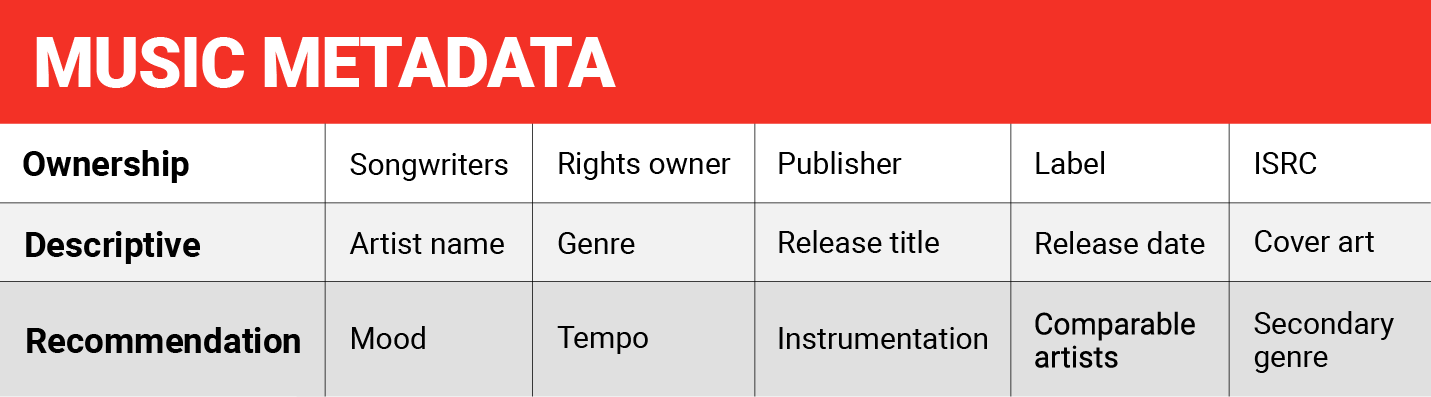
There are three essential classes of metadata: possession (or rights) knowledge, descriptive knowledge, and advice knowledge.
- Possession metadata helps guarantee cost and rights safety.
- Descriptive metadata helps catalog group.
- Suggestion metadata fuels algorithmic discovery.
The chart under gives some key examples of metadata in every class.
Why does music metadata matter and the way is it used?
In case you study the chart above, you’ll discover metadata actually encompasses your total launch, making it indexable and trackable throughout platforms.
Now let’s take a more in-depth have a look at the advantages of metadata and the way it’s used.
Receives a commission precisely and on time
Your metadata accommodates data akin to songwriting splits and publishing rights, which DSPs, distributors, and publishers depend on for royalty funds.
Earlier than submitting your music, at all times finalize your songwriter splits and evaluate your copyright data to make sure any contributors are paid accordingly.
Metadata turns into particularly essential should you register your music with a performing rights group or collections societies. These companions rely upon matching metadata to course of royalties precisely.
Keep away from rejection from DSPs
Streaming platforms depend on metadata to course of your music precisely, route royalty funds, and optimize the fan expertise. Platforms maintain metadata correct by sustaining sure requirements and necessities for music uploads, which distributors (and thereby artists) must comply with.
In case you’re planning to launch music, select a major-platform-preferred distributor like CD Child to make sure your music meets necessities for distribution.
Energy customized discovery
You can also make it simple for followers to seek out your music and for algorithms to advocate it, by offering knowledge round style or association. This knowledge may help algorithms relate your music to different artists’ music and nice tune its discovery tracks for followers. Platforms are at all times advancing their advice capabilities by means of new instruments in addition to highly effective integrations.
Land extra placements
Detailed metadata can improve your probabilities of being thought of for placements in combined media (sync licensing) in addition to Spotify playlists. Each alternatives can think about “advice” metadata akin to temper, tempo, and association to evaluate how your track would possibly match the playlist or media.
What are some metadata greatest practices?
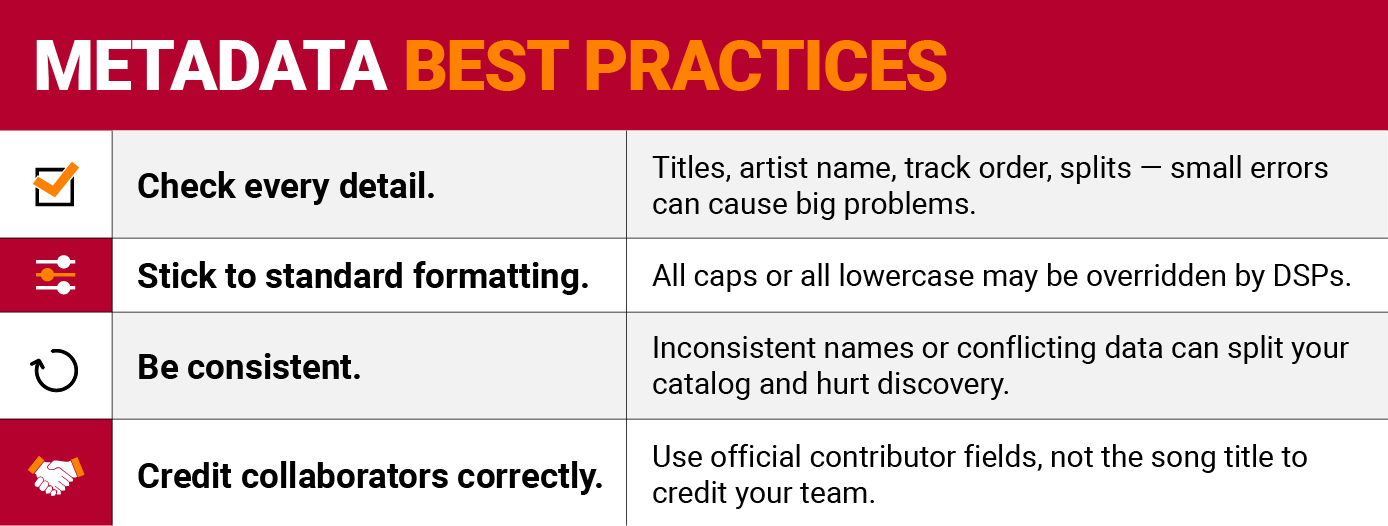
Preserving your metadata clear and constant units your music up for fulfillment from submission to launch day and past. Comply with these greatest practices to optimize your metadata.
Accuracy
Double-check your submission to make sure you’ve accurately entered subjective data like track and launch titles, your artist title, monitor order, and extra. Distributors will solely evaluate your metadata to make sure it meets goal platform necessities.
Capitalization
Comply with capitalization practices (of Chicago Type for English Language) for launch titles to keep away from issues with formatting on digital streaming platforms. Utilizing non-standard formatting, akin to all-capitalization or all-lowercase, might trigger points or DSP overrides.
Consistency
Make your music searchable (and precisely sorted by algorithms) by conserving metadata constant throughout platforms and uploads. Altering your artist title or releasing music with incomplete or contradictory metadata can fracture your catalog.
Options
Comply with your distributor’s submission circulate to enter contributors and roles in devoted type fields. From there, particular person platforms will select to show the data within the monitor or album titles based mostly on their inner tips. Don’t embrace contributors in parenthesis inside your launch titles.
How do I present metadata for my music?
Your distributor will ask you to offer all the appropriate metadata throughout your music submission course of.
CD Child has been gathering strong metadata from our artists for over 25 years and is a most popular distribution associate of main platforms like Spotify and Apple Music. Once you distribute your music with CD Child, you’re following tips we’ve labored carefully with main digital streaming platforms to develop and implement that will help you shield your music, construct your fanbase, and receives a commission.
Able to distribute your music with correct, industry-standard metadata? CD Child affords distribution to over 150 streaming platforms worldwide at reasonably priced pay-per-release charges. Create a free account at this time and launch your music on time.


